

Black Poplar Mushroom
Cyclocybe aegerita
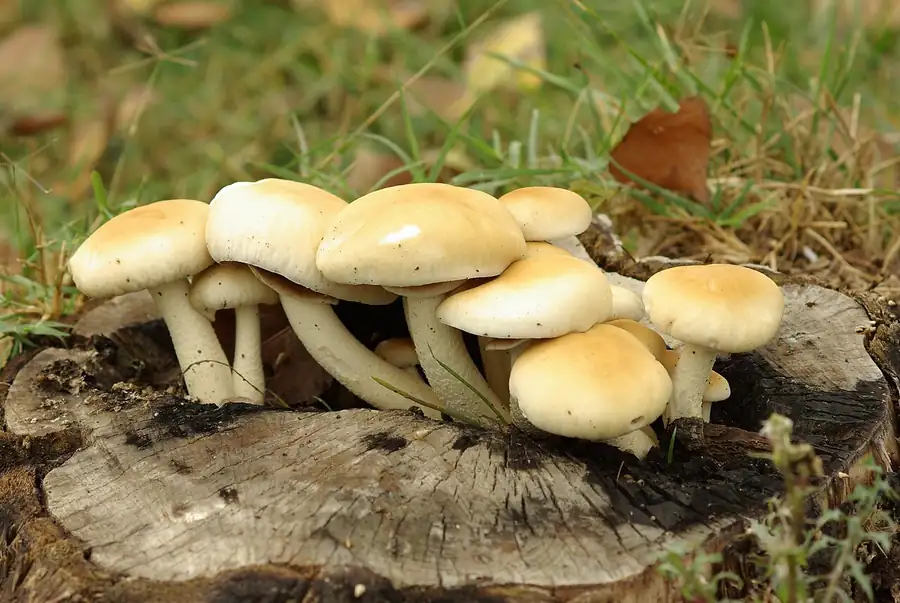
The black poplar mushroom, also sold as pioppino, grows on sawdust and agricultural wastes; a 2025 trial at 25 °C and 85% humidity reached 36% biological efficiency on cottonseed hulls.
Cyclocybe aegerita, also called Agrocybe cylindracea or Agrocybe aegerita, is commonly known as the poplar fieldcap or velvet pioppini. A 2025 Chinese trial grew it in bags at 25 °C and 85% relative humidity on three substrates, each supplemented with 20% wheat bran and 2% lime. Cottonseed hulls gave the highest biological efficiency at 35.8%, followed by juncao grass mixes at 31.5% and tea leaves with sawdust at 28.7%. The FAO manual lists 22–34 °C for the brown strain and 20–32 °C for the white strain in Thailand.
Cultivation parameters
Climate
| Colonization temperature | 25 °C |
|---|---|
| Overall cultivation temperature | 20–34 °C |
| Fruiting temperature | 25 °C |
| Fruiting humidity | 85% |
| Air / CO₂ notes | A 2025 Chinese bag trial grew the mushroom at 25 °C and 85% relative humidity. The FAO manual lists 22–34 °C for the brown strain and 20–32 °C for the white strain in Thailand. |
| Cold shock | Not required |
Timing & substrate
| Primary substrate | Cottonseed hulls, juncao grass or tea-leaf and sawdust mixes |
|---|---|
| Substrate options | Cottonseed hulls, Giant juncao grass, Spent tea leaves and sawdust, Wheat bran |
Practical literature-range
| Best methods | Autoclaved supplemented bags |
|---|---|
| Difficulty | Intermediate — Grows on sawdust and agricultural wastes, but trials show modest efficiency |
Taxonomy & ecology
| Scientific name | Cyclocybe aegerita |
|---|---|
| Also known as | Poplar fieldcap, Velvet pioppini, Pioppino, Yanagi-matsutake, Tea tree mushroom, Agrocybe cylindracea |
| Synonyms | Agrocybe aegerita, Agrocybe cylindracea, Pholiota aegerita |
| Family | Tubariaceae |
| Order | Agaricales |
| Genus | Cyclocybe |
| Lifestyle | Saprotroph |
| Natural habitat | Poplar stumps and other hardwood |
| Cultivation status | Commercially cultivated |
How to grow Black Poplar Mushroom, step by step
- Mix the substrate. Blend cottonseed hulls, juncao grass or tea leaves with sawdust, add 20% wheat bran and 2% lime, and bag it.
- Sterilize. Autoclave the bags at 121 °C for about two hours and let them cool.
- Inoculate. Add spawn from a culture grown at 25 °C.
- Grow. Hold the room at about 25 °C and 85% relative humidity.
- Harvest. Pick when the caps are developed.
Growing notes
The efficiencies in the trial are modest compared with oysters, so budget conservatively. Note that the species goes by several scientific names in the literature; this page treats Agrocybe cylindracea and Cyclocybe aegerita as the same mushroom.
Questions about growing Black Poplar Mushroom
What temperature does the black poplar mushroom need?
A 2025 trial used 25 °C and 85% humidity. The FAO manual lists 22–34 °C (brown) and 20–32 °C (white) in Thailand.
What substrate works?
Cottonseed hulls gave the best biological efficiency, followed by juncao grass mixes and spent tea leaves with sawdust, each with wheat bran and lime.
How much does it yield?
Biological efficiency was 35.8% on cottonseed hulls, 31.5% on juncao grass mixes and 28.7% on tea leaves with sawdust.
Is it the same as pioppino?
Yes, pioppino and velvet pioppini are names for Cyclocybe aegerita, also written Agrocybe cylindracea.
Does it grow wild?
Yes, on poplar stumps and other hardwood. This page covers cultivation only and cannot help identify wild mushrooms.