

Phoenix Oyster
Pleurotus pulmonarius
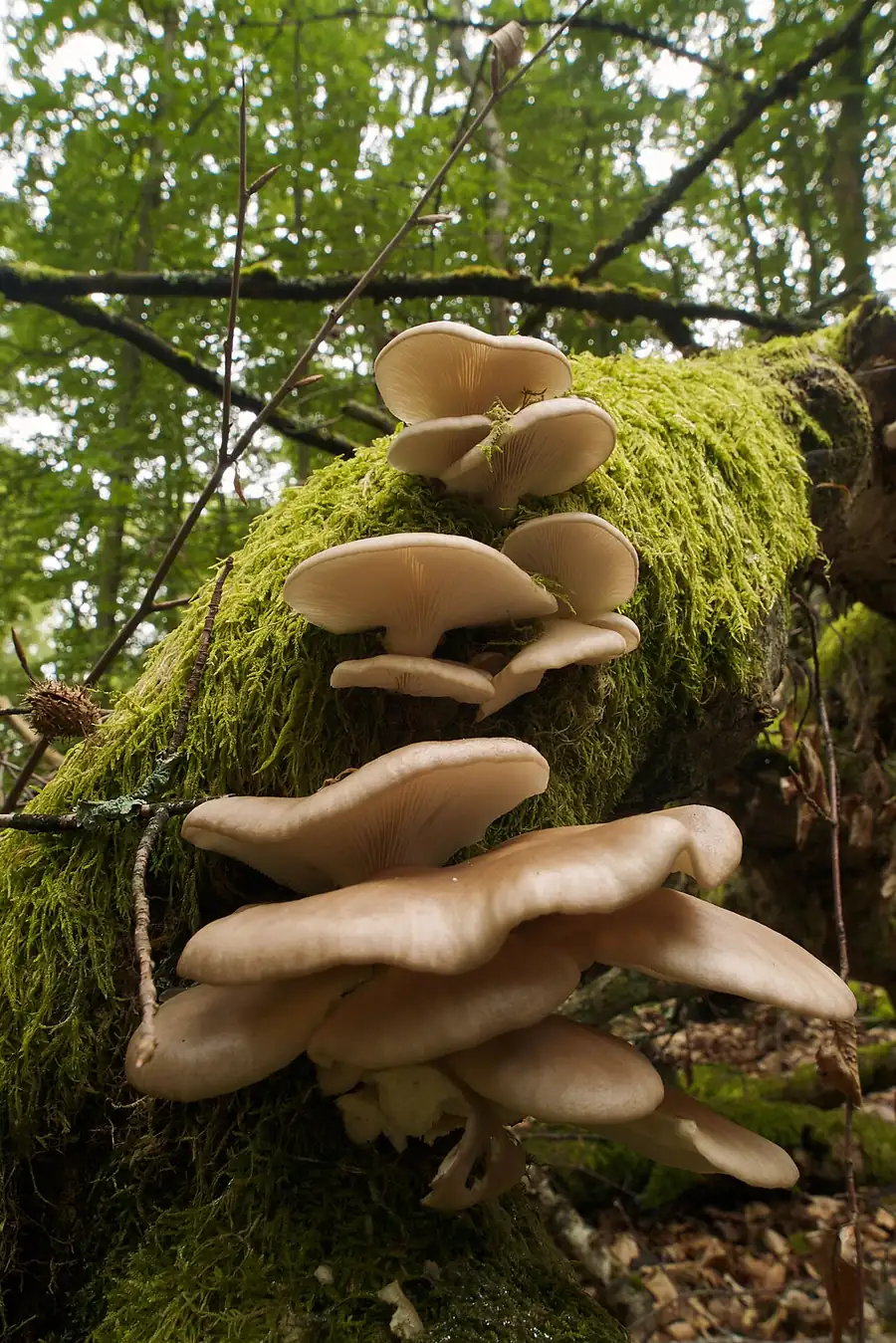
The phoenix oyster, also sold as Indian, Italian or lung oyster, is a close relative of the pearl oyster and one of the most commonly cultivated oysters in Europe and North America.
Pleurotus pulmonarius grows on a wide range of cellulose-based materials: after colonising grain spawn it is moved onto straw, wood chips, sawdust, cardboard, coffee grounds and similar substrates. Oyster mushrooms in general grow quickly across about 10–30 °C and prefer a substrate pH of 6–8, and the mycelium of this species grew best at pH 7.0 in a laboratory comparison. Spawn rate matters: on wheat straw the spawn run was shortest, 10.5 days, at 8% spawn, while commercial recommendations are typically 7–10%. Reported biological efficiency on wheat straw ranged from 42% to 100% in two studies, so strain and method make a large difference.
Cultivation parameters
Timing & substrate
| Colonization | 10.5 days |
|---|---|
| Primary substrate | Straw (wheat straw in the cited trials) |
| Substrate options | Straw, Wood chips, Sawdust, Cardboard, Coffee grounds |
Substrate compatibility
| Substrate | Suitability | Notes |
|---|---|---|
| Wheat straw | Good | Reported biological efficiency 42.15–99.7% across 2 studies |
Spawn & substrate preparation
| Spawn types | Grain spawn |
|---|---|
| Spawn rate | 7–10% of substrate weight |
| Spawn notes | In a wheat-straw trial the shortest spawn run (10.5 days) came at an 8% spawn rate; lower rates (6, 4, 2, 1, 0.5%) took longer. |
Yield
| Biological efficiency | Typical range 42–100% |
|---|
Practical literature-range
| Best methods | Bags or buckets of straw, Sawdust blocks |
|---|---|
| Difficulty | Beginner — Like other oyster mushrooms it grows on a wide range of straw and wood residues |
Taxonomy & ecology
| Scientific name | Pleurotus pulmonarius |
|---|---|
| Also known as | Indian oyster, Italian oyster, Lung oyster |
| Family | Pleurotaceae |
| Order | Agaricales |
| Genus | Pleurotus |
| Lifestyle | Saprotroph |
| Natural habitat | Wood; mostly hardwoods in the eastern United States and also conifers in the west |
| Native range | Temperate and subtropical forests worldwide |
| Cultivation status | Commercially cultivated |
How to grow Phoenix Oyster, step by step
- Choose and prepare the substrate. Use straw, sawdust or another cellulose-based material and pasteurise it.
- Mix in grain spawn. Add grain spawn at roughly 7–10% of the substrate weight.
- Run the spawn. Keep the bags at a steady, warm temperature until the mycelium has colonised the substrate; 10.5 days was the shortest in the cited trial at 8% spawn.
- Fruit and harvest. Give fresh air and humidity once colonised, and pick the clusters as they mature.
Growing notes
In the wild the species grows on hardwoods in the eastern United States and also on conifers in the west. In cultivation, start from grain spawn, use clean, pasteurised straw or sawdust, and keep the spawn rate in the commercial 7–10% band: higher rates do not improve results, and rates that are too low slow the run. Because only limited species-specific climate data was found, use the pearl oyster page and the oyster-wide ranges above as a starting point and confirm with your strain.
Questions about growing Phoenix Oyster
Are phoenix, Indian, Italian and lung oyster the same mushroom?
Yes. These are common names for Pleurotus pulmonarius, which is closely related to the pearl oyster, Pleurotus ostreatus.
What substrate does the phoenix oyster grow on?
Straw, wood chips, sawdust, cardboard, coffee grounds and other cellulose-based materials, usually started from grain spawn. Wheat straw was used in the cited spawn-rate trial.
How much spawn should I use?
Commercial recommendations are typically 7–10% of the substrate weight, and spawn should not exceed 10% to avoid losing biological efficiency. In a wheat-straw trial, an 8% rate gave the shortest spawn run of 10.5 days.
What yield can I expect?
Reported biological efficiency on wheat straw was 42% in one study and about 100% in another, so treat any single figure with caution.